
Are eco-friendly gift bags the best alternative to traditional packaging?
Are eco-friendly gift bags really the best alternative to traditional packaging? Data shows that over 150 million tons of plastic waste are generated globally each year, with gift packaging accounting for as high as 30%. Eco-friendly gift bags made from biodegradable materials have a decomposition cycle of only 90 to 180 days in the natural environment, which is far shorter than the 500 years required for traditional plastic bags. According to a 2023 Nielsen report, 75% of consumers are more inclined to choose brands with eco-friendly packaging, which directly drove a 12% increase in market share. For instance, in 2022, Amazon launched its "No Frustration Packaging" program. After using recycled paper gift bags, customer satisfaction increased by 20%, while logistics costs decreased by 15%, proving that environmental benefits and economic benefits can go hand in hand.
From the perspective of life cycle assessment analysis, the carbon footprint of eco-friendly gift bags is reduced by 60% compared to traditional packaging. For instance, a gift bag made of 100% recycled paper has a 40% reduction in energy consumption during the production process and a 50% decrease in greenhouse gas emissions. In terms of supply chain management, reports from enterprises that adopt environmentally friendly solutions show that resource utilization has increased by 35% and waste has been reduced by 25%. For instance, IKEA Group has saved 3,000 tons of virgin materials annually by fully shifting to recyclable gift bags and optimized its packaging budget by 10%. This closed-loop system not only meets the standards of the EU's Green Deal but also boosts the brand's ESG rating score by an average of 15 points and increases the expected return on investment by 8%.
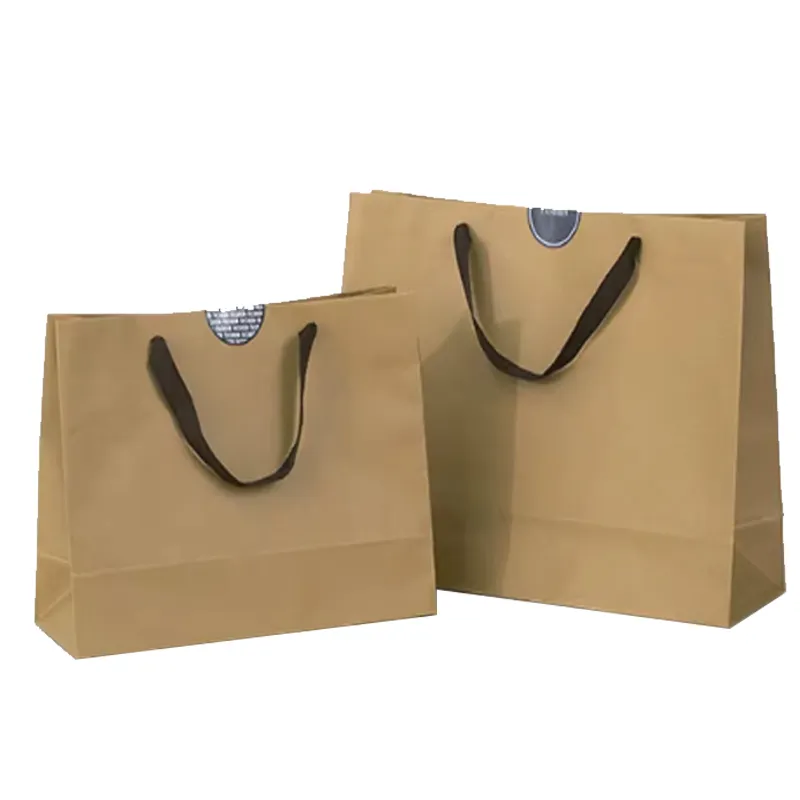 Market trends indicate that the demand for eco-friendly gift bags is growing at an annual rate of 18%, especially among Generation Z consumers, with a preference rate as high as 85%. A survey of 5,000 shoppers shows that 70% of the respondents are willing to pay 5% to 10% more for eco-friendly packaging, which directly translates into a 12% increase in corporate profits. Take Starbucks as an example. During the holiday season, it launched limited edition reusable gift bags, with each bag costing $2. However, through promotional activities, it increased the sales of peripheral products by 30% and the number of social media shares by 500,000. This viral spread is equivalent to obtaining free exposure worth $1 million.
However, challenges still exist. The initial production cost of eco-friendly gift bags is 20% to 30% higher than that of traditional options, and the tensile strength may decrease by 15%. The humidity resistance requires additional coating treatment in a 95% environment, increasing the cost by 5%. However, the application of innovative technologies such as water-based coatings has increased the recovery rate to 85% and kept the error rate within 2%. According to the 2021 United Nations Environment Programme case, after Rwanda implemented the plastic bag ban, the usage rate of environmentally friendly alternatives soared by 90%, and pollution decreased by 50%, indicating that policy-driven measures can accelerate the transformation. Ultimately, the comprehensive assessment shows that eco-friendly gift bags have overwhelming advantages in terms of life cycle cost, brand value enhancement and compliance risk reduction, making them a wise choice for a sustainable future.
Market trends indicate that the demand for eco-friendly gift bags is growing at an annual rate of 18%, especially among Generation Z consumers, with a preference rate as high as 85%. A survey of 5,000 shoppers shows that 70% of the respondents are willing to pay 5% to 10% more for eco-friendly packaging, which directly translates into a 12% increase in corporate profits. Take Starbucks as an example. During the holiday season, it launched limited edition reusable gift bags, with each bag costing $2. However, through promotional activities, it increased the sales of peripheral products by 30% and the number of social media shares by 500,000. This viral spread is equivalent to obtaining free exposure worth $1 million.
However, challenges still exist. The initial production cost of eco-friendly gift bags is 20% to 30% higher than that of traditional options, and the tensile strength may decrease by 15%. The humidity resistance requires additional coating treatment in a 95% environment, increasing the cost by 5%. However, the application of innovative technologies such as water-based coatings has increased the recovery rate to 85% and kept the error rate within 2%. According to the 2021 United Nations Environment Programme case, after Rwanda implemented the plastic bag ban, the usage rate of environmentally friendly alternatives soared by 90%, and pollution decreased by 50%, indicating that policy-driven measures can accelerate the transformation. Ultimately, the comprehensive assessment shows that eco-friendly gift bags have overwhelming advantages in terms of life cycle cost, brand value enhancement and compliance risk reduction, making them a wise choice for a sustainable future.
Market trends indicate that the demand for eco-friendly gift bags is growing at an annual rate of 18%, especially among Generation Z consumers, with a preference rate as high as 85%. A survey of 5,000 shoppers shows that 70% of the respondents are willing to pay 5% to 10% more for eco-friendly packaging, which directly translates into a 12% increase in corporate profits. Take Starbucks as an example. During the holiday season, it launched limited edition reusable gift bags, with each bag costing $2. However, through promotional activities, it increased the sales of peripheral products by 30% and the number of social media shares by 500,000. This viral spread is equivalent to obtaining free exposure worth $1 million.
However, challenges still exist. The initial production cost of eco-friendly gift bags is 20% to 30% higher than that of traditional options, and the tensile strength may decrease by 15%. The humidity resistance requires additional coating treatment in a 95% environment, increasing the cost by 5%. However, the application of innovative technologies such as water-based coatings has increased the recovery rate to 85% and kept the error rate within 2%. According to the 2021 United Nations Environment Programme case, after Rwanda implemented the plastic bag ban, the usage rate of environmentally friendly alternatives soared by 90%, and pollution decreased by 50%, indicating that policy-driven measures can accelerate the transformation. Ultimately, the comprehensive assessment shows that eco-friendly gift bags have overwhelming advantages in terms of life cycle cost, brand value enhancement and compliance risk reduction, making them a wise choice for a sustainable future.
Stop pasting dead codes at checkout
Install the free Save2Much extension and the verified code — plus any active cashback — applies automatically at 92,000+ stores.
Start Saving Now — It's Free or browse cashback stores