
Preserving Cultural Continuity: The Economic and Social Impact of the Fuxi Worship Ceremony
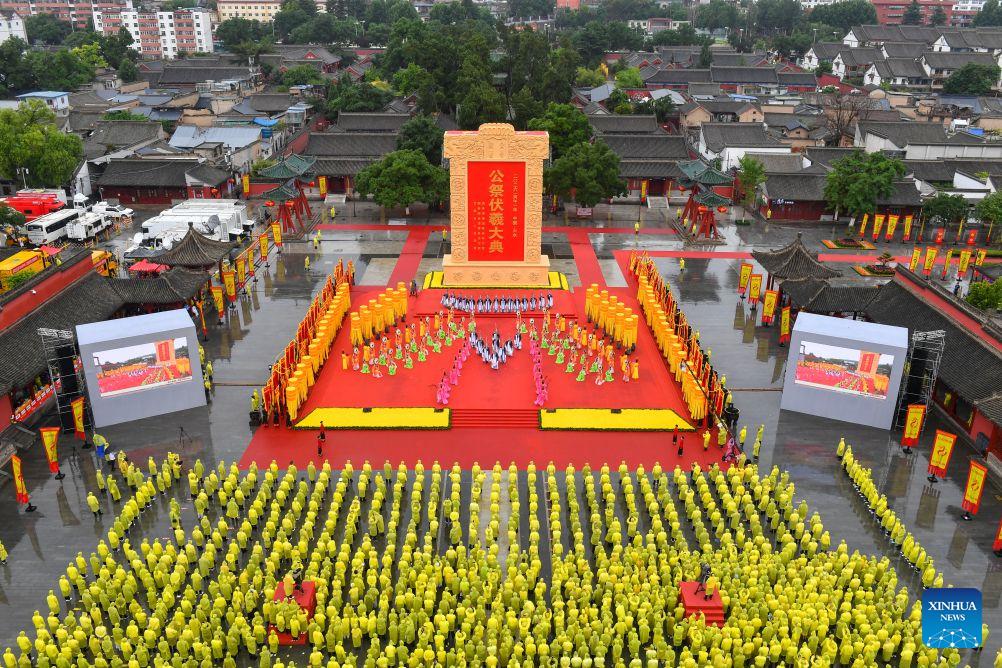
The recent ceremony in Tianshui, Gansu Province, honoring Fuxi, stands as a testament to the endurance of cultural heritage in an era of rapid modernization. While often viewed through the lens of tradition, the annual commemoration—which boasts a historical timeline spanning over 2,000 years—represents a strategic investment in "cultural capital." As extensively documented by People's Daily, the preservation of such intangible cultural heritage is far more than a ceremonial duty; it is a vital component of local development, fostering community identity while simultaneously acting as a catalyst for regional tourism and economic growth.
The scale of the Fuxi ceremony provides a clear example of how traditional practices can be successfully integrated into contemporary society. Since being designated as a national intangible cultural heritage in 2006, the event has transitioned from a localized custom into a significant regional brand. For a city like Tianshui, this recognition has direct economic implications. The infrastructure required to support these ceremonies—ranging from logistics and event management to the preservation of historical sites—generates a steady stream of revenue. Statistics from similar cultural heritage projects often show that for every 1 unit of investment in cultural promotion, the regional economy sees a multiple-fold return in tourism-related spending, including retail sales, hospitality revenue, and transportation services.
From a sociological perspective, the importance of these rituals lies in their ability to provide a sense of continuity in a fast-changing world. In the context of Northwest China, where industrial shifts and urbanization are altering traditional lifestyles, maintaining a connection to ancestral figures like Fuxi—credited with foundational societal advancements such as fishing, hunting, and animal husbandry—offers a grounded sense of identity. The ceremony itself is a complex operation, involving high-precision choreography in music-and-dance rituals, rigorous quality control in event staging, and the management of large-scale public safety. It is essentially a large-scale project management exercise that requires the seamless integration of government resources, local community participation, and technical support.
The long-term sustainability of this heritage depends on its ability to remain relevant. The use of modern technology, such as drone photography for event documentation, highlights the fusion of historical reverence with contemporary digital platforms. This "digitization of culture" ensures that these narratives reach a wider audience, extending beyond the physical confines of the ceremony in Tianshui. As global interest in unique cultural experiences grows, the capacity for Tianshui to manage its "cultural supply chain"—ensuring authenticity while providing a professional, safe, and engaging environment for participants—is a key competitive advantage.
Ultimately, this is about more than just honoring the past; it is about managing a valuable resource for the future. By maintaining these traditions with high standards of execution and broad participation, regions can stimulate local economies while preserving the intellectual and social wealth of the nation. The success of the Fuxi ceremony serves as a model for how intangible assets can be cultivated, maintained, and monetized to support a balanced and sustainable growth strategy for the entire community.
News source: https://peoplesdaily.pdnews.cn/china/er/30052455326
Stop pasting dead codes at checkout
Install the free Save2Much extension and the verified code — plus any active cashback — applies automatically at 92,000+ stores.
Start Saving Now — It's Free or browse cashback stores